One of the biggest changes you’ll have to make in school is moving from O-Level A Maths to JC H2 Maths. Many students think that H2 Math is just “harder A Math,” but this can cause them to have unrealistic standards and struggle for no reason.
The truth is that H2 Math vs. A Math is about a lot more than just getting harder. It changes how maths is taught, learnt, and used in a basic way. You need to know these changes if you want to do well in this transition or if you’re just curious about whether you need JC Maths tuition in Singapore.
This article will show the main differences between A Maths and H2 Maths in terms of what they cover in school, the skills they need, how the tests are set up, and the way students need to think mathematically. Are you ready to find out what Maths in High School really holds for you?
Key Takeaways:
- H2 Math is not just “harder A Math” — it introduces broader topics, deeper concepts, and real-world applications.
- A Math focuses on procedural skills, while H2 Math demands conceptual understanding, reasoning, and analytical thinking.
- Exam formats differ: A Math is structured and predictable, while H2 Math features complex, multi-step, open-ended problems.
- A strong A Math foundation is essential; many students benefit from JC Math tuition in Singapore during the transition.
- Choosing between H1 and H2 Math depends on university aspirations, workload capacity, and confidence in mathematics.
Curriculum Differences

A Math (O-Level): Building the Foundation
A Math emphasises the establishment of fundamental mathematical principles that act as foundations for advanced mathematics. This is the material you have been utilising:
- Fundamental algebra: Quadratic equations, simultaneous equations, exponents, and surds
- Trigonometry: Fundamental trigonometric ratios, identities, and elementary equations
- Fundamental calculus: Fundamentals of differentiation and integration
- Coordinate geometry: Linear equations, circles, and fundamental curve representation
The level of content in A Maths aims to cultivate your fundamental problem-solving abilities, as most questions adhere to recognisable patterns once the techniques are learnt.
H2 Math (A-Level): Broadening Your Mathematical Horizons
H2 Math expands upon your existing knowledge considerably. The program encompasses:
- Higher-level calculus: Advanced differentiation methods, integration by parts, and differential equations
- Probability and Statistics: Hypothesis testing, normal distributions, correlation, and regression analysis
- Vectors: Three-dimensional coordinate geometry, vector equations, and their applications
- Complex numbers: Argand diagrams, De Moivre’s theorem, and polynomial roots
However, this is where it becomes intriguing — H2 Maths does not only incorporate additional topics. The applications encompass real-world models and multidisciplinary issues. Calculus may be employed to resolve optimisation problems in economics, whereas statistical approaches can be utilised to examine biological data.
Skill Level Required

From Procedural to Conceptual Thinking
This is where many students feel the shock of transition. Let’s break down what changes:
A Math approach:
- Tests whether you can apply formulas and methods correctly
- Questions often follow predictable patterns
- Success comes from memorising procedures and practising similar problems
H2 Math demands:
- Deriving methods: Understanding why formulas work, not just how to use them
- Interpreting results: Making sense of your mathematical findings in context
- Adapting approaches: Modifying known methods for unfamiliar situations
Higher Order Skills You’ll Need
H2 Math necessitates the cultivation of what mathematicians refer to as “mathematical maturity.” This encompasses:
- Logical reasoning: Formulating mathematical arguments and proofs
- Data analysis: Analysing intricate statistical data
- Graph interpretation: Comprehending the visual representation of mathematical relationships
- Topic synthesis: Integrating many mathematical notions into a singular inquiry
Foundation reality check: A strong A Math foundation is necessary. If you encountered difficulties with A Math concepts, you will likely require supplementary preparation or JC Math tutoring in Singapore to effectively close the gap.
Exam Format & Assessment Style
A Math Exams: Structured and Predictable
A Math papers are generally student-friendly in their approach:
- Structured questions: Most problems break down into clear, manageable steps
- Method marks: You’re rewarded for applying the correct approach, even if calculation errors occur later
- Familiar patterns: Regular practice with past papers prepares you well for exam format
H2 Math Exams: Complex and Demanding
H2 Math assessments represent a significant step up in complexity:
- Open-ended problems: Less structured questions requiring you to determine the approach
- Multi-step challenges: Problems requiring synthesis of different mathematical topics
- Rigour and accuracy: Greater emphasis on precise mathematical communication and correct final answers
- Time pressure: Longer papers with more complex problems test your exam stamina
Key difference: H2 Math tests your depth of understanding and mathematical thinking, not just your memory of methods and procedures.
Type of Thinking Required
Algorithmic vs Analytical Approaches
The shift in thinking style is perhaps the most challenging aspect of the transition:
A Math thinking (Algorithmic):
- Apply known formulas to solve standard problems
- Follow established procedures step-by-step
- Focus on getting the mechanics right
H2 Math thinking (Analytical):
- Break down unfamiliar problems into manageable components
- Choose appropriate mathematical approaches from your toolkit
- Justify your solutions and interpret your results
Mathematical Maturity in Action
Consider this example to illustrate the difference:
- A Math: You solve quadratic equations using the quadratic formula or factorisation
- H2 Math: You might encounter quadratics within probability distributions, optimisation problems, or when modelling real-world phenomena – requiring you to recognise when and how quadratics apply in these contexts
This shift towards analytical thinking develops critical skills valued in STEM pathways: abstraction, flexibility, and the ability to tackle unfamiliar problems systematically.
How to Prepare for the Transition

Practical Preparation Strategies
Want to set yourself up for H2 Math success? Here’s what you can do:
Before JC begins:
- Consolidate A Math fundamentals: Ensure you’re completely comfortable with basic concepts
- Practice cross-topic problems: Work on questions that combine different mathematical areas
- Build problem-solving confidence: Attempt more challenging A Math questions that require thinking beyond standard procedures
During JC:
- Develop exam stamina: H2 papers are significantly longer and more mentally demanding
- Practice regularly: Consistent work is more effective than intensive cramming sessions
- Seek help early: Don’t wait until you’re struggling to address gaps in understanding
Consider professional support: Many successful H2 Math students benefit from JC Math tuition Singapore for targeted coaching and structured practice.
Advice for Parents
Understanding the increased workload and complexity can help you support your child effectively:
- Recognise the transition challenge: This isn’t just “more of the same” – it’s genuinely more demanding
- Encourage balance: H2 Math requires significant time investment, but shouldn’t dominate all other JC commitments
- Consider early intervention: If your child found A Math challenging, proactive tuition support can prevent larger problems later
Choosing the Right Path: H1 vs H2 Math
Understanding Your Options
Not everyone needs to take H2 Math, and that’s perfectly fine. Here’s how to decide:
H2 Math is ideal if you’re:
- Aiming for STEM-related university courses (engineering, computing, physical sciences)
- Considering economics, business, or finance programmes
- Confident in your mathematical abilities and enjoyed A Math
- Prepared for the increased time commitment and challenge level
H1 Math might be better if you’re:
- Focusing on humanities or arts pathways
- Want mathematical literacy without the intensity of H2
- Need more time to excel in other H2 subjects
- Found A Math consistently challenging despite effort
Remember, there’s no shame in choosing H1 Math if it better suits your goals and strengths. The key is making an informed decision based on your university aspirations and realistic self-assessment.
Do You Need JC Math Tuition Singapore for H2 Math?
.
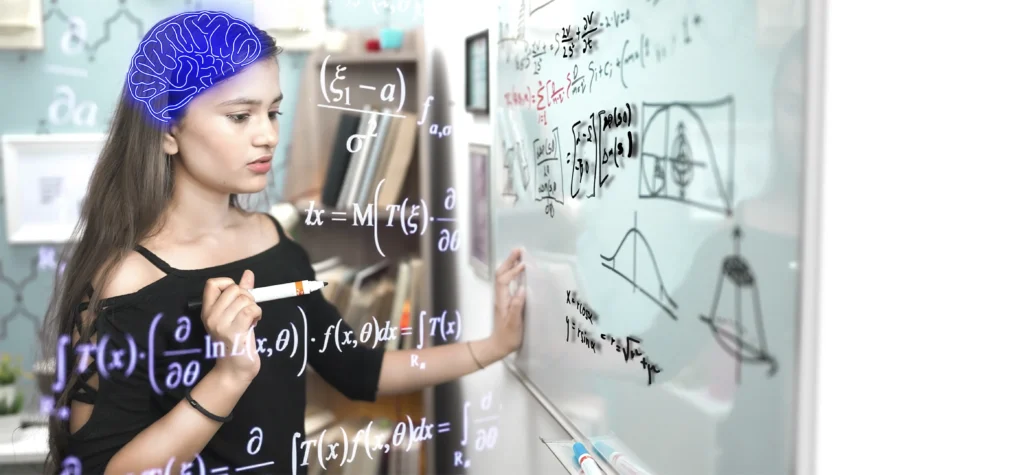
The differences between A Math and H2 Math extend far beyond simply being “more difficult.” You’re looking at a fundamental shift in curriculum depth, required skill level, exam complexity, and the type of mathematical thinking demanded.
H2 Math isn’t just “harder A Math” – it represents a new level of mathematical maturity that prepares you for university-level STEM subjects. The transition requires not just more study time, but a different approach to learning and problem-solving entirely.
Before you commit to H2 Math, honestly assess your readiness:
- Are you comfortable with all A Math topics?
- Do you enjoy mathematical problem-solving and reasoning?
- Are you prepared for the increased workload and complexity?
If you’re feeling uncertain about any of these aspects, don’t hesitate to seek guidance. Many students benefit from structured support during this transition period.
Ready to tackle H2 Math with confidence? Consider getting personalised advice and targeted support from New Dawn Learning Studio to ensure you’re fully prepared for this exciting mathematical journey.
Quick Comparison: A Math vs H2 Math
| Aspect | A Math (O-Level) | H2 Math (A-Level) |
| Curriculum Focus | Core topics, foundational skills | Advanced topics, real-world applications |
| Thinking Style | Algorithmic, procedural | Analytical, conceptual |
| Exam Format | Structured, predictable questions | Open-ended, multi-topic synthesis |
| Skill Emphasis | Method application | Understanding, reasoning, proof |
| Time Investment | Moderate | Significant |
| University Relevance | General mathematical literacy | Essential for STEM pathways |
Frequently Asked Questions
Is H2 Math compulsory in JC?
No, H2 Math is not compulsory. Students can choose between H1 and H2 Math, or in some cases, take neither if their university pathway doesn’t require mathematics.
How much harder is H2 Math compared to A Math?
H2 Math represents a significant step up – not just in difficulty, but in the type of thinking required. The curriculum is broader, problems are more complex, and the analytical skills needed are substantially higher.
Can I do well in H2 Math without tuition?
While it’s certainly possible, many students benefit from structured tuition support, especially during the initial transition period. The key is identifying your needs early and seeking appropriate help.
Do universities in Singapore require H2 Math?
Most STEM-related programmes (engineering, computing, physical sciences, economics) require or strongly prefer H2 Math. Humanities and arts programmes typically don’t require it.
Should I choose H1 or H2 Math if I’m unsure?
Consider your university aspirations first. If you’re targeting STEM programmes, H2 Math is usually necessary. If you’re unsure about your path, H2 Math keeps more doors open, but only choose it if you’re genuinely prepared for the challenge.